

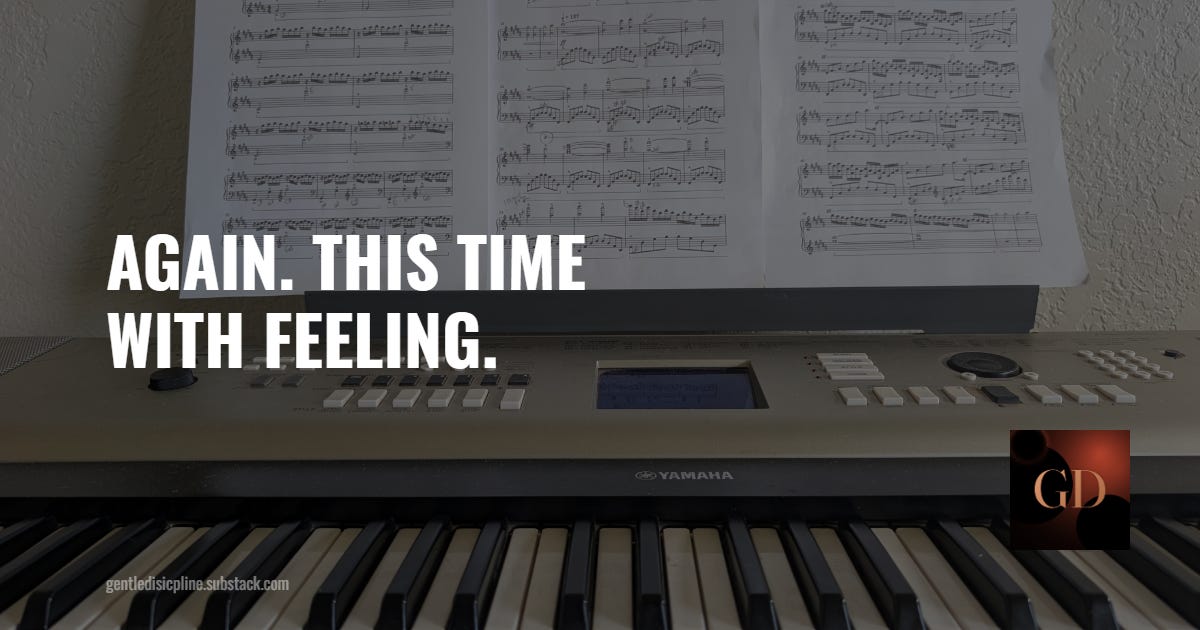
"Master your instrument. Master the music. And then forget all that bullshit and just play.”
—Charlie Parker
Growing up in Prescott, Arizona, I started taking piano lessons when I was six years old. I never really appreciated it until I got to high school, when my ability to play helped make me popular with the girls. Ironically, that’s also when I stopped taking lessons. But I’ve always been close with the piano, even when I wasn’t maintaining a disciplined practice.
I went a long time through college and the Army without playing, then started to dabble again when I got out, but it’s taken me until 2026 to practice consistently enough to start playing at a high level again. Just like when I was taking lessons, I practice daily now (or at least very close to daily).
My first piano teacher’s name was Clare Willy. He was an old jazz head who took on a few private clients out of his house and played gigs in his spare time across town. I had a few more teachers after him, all of them excellent in their own way, but it was through his instruction that my foundation was set in a way I didn’t understand until just the other day.
I’m learning a piece by Tony Ann right now. It’s called Desire. (This is the Spotify link if you’d like to listen)
It’s a beautiful, challenging song I’ve had to learn line by line, one hand at a time, slow at first when combining the left and right hands, then gradually faster. I have notes scribbled all over the sheet music to remind me of octave jumps and scale progressions and tricky notes I always seem to miss.
It has taken me months to get comfortable with the song. I’ve invested hours and hours and hours into it, enough that I’ve got it mostly memorized now. Which just means I don’t have to think so much about what I’m playing.
I’m reminded of lessons I spent as a young boy with Clare Willy guiding me along the music. I would play a song that I had practiced ruthlessly and he would nod along, make tiny corrections if necessary, and then when I was finished, if he thought I was ready, he would say:
“Good. Again. This time with feeling.”
So I would lean and breathe and rock with the song. I would forget about the notes I was supposed to play, the staccato crisp release on the keys, when the pedal was supposed to be down or up, what the fingers of the right hand melody were doing in relation to the left hand harmony, the key changes, the Allegro or Adagio tempo changes, forte, piano, pianissimo volume crescendos and diminuendos.
And I would just play.
The repetition and brutal practice and memorization and frustration of learning would all combine into the most necessary ability of all: surrender. To transmute the suffering of practice into the beauty of music played through the heart.
What I didn’t recognize then that I do now is that the suffering of practice is a necessary component to the discovery of self, no matter the endeavor. Without intellectual rigor, discovery, practice, organization and reorganization of your thoughts, you may still achieve occasional harmony between your thoughts and emotions, but it will be fleeting. You will not be able to consciously channel your feelings into whatever it is you choose to do, be that playing an instrument, creating some other kind of art, pursuing success at your job, or loving your partner.
Suffering is the price of learning, practice is the price of expertise, and feeling is the proof of mastery.
But there is a danger to falling in love with the suffering of practice, especially in this hyper-optimized culture of 2026, where step trackers, calendar automations, and self-development podcasts keep us trapped within checklists and routines that operate like treadmills getting us nowhere.
I would suggest that if you’ve fallen in love with the suffering itself, you’re missing the point. Suffering is not the purpose of discipline.
The purpose of discipline is its own disappearance.
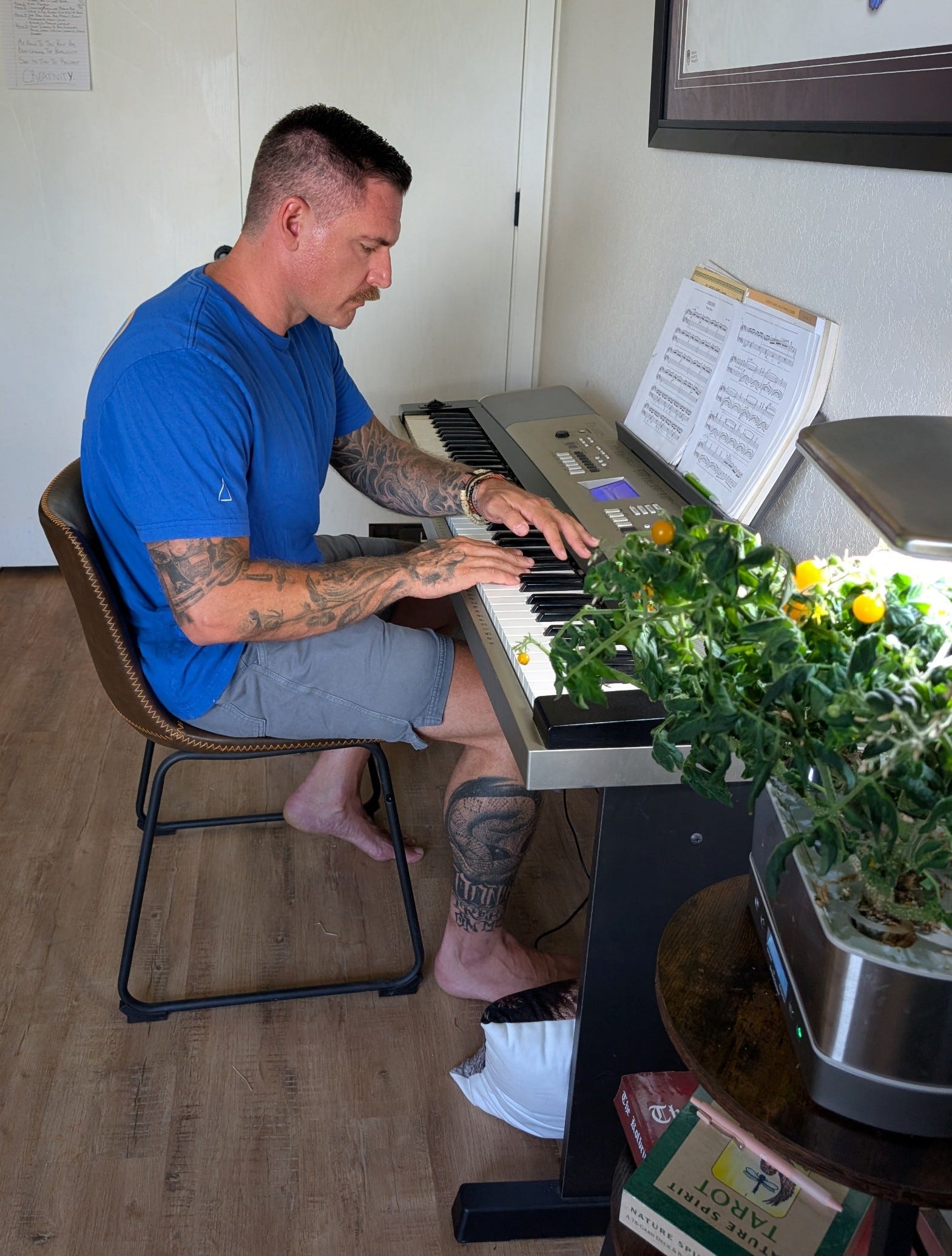
To scribble notes all over the sheet music until you don’t even need to use them anymore. To play the notes so many times, your hands have memorized the patterns and you don’t need your brain to move your fingers. To feel the melody rather than play it the way you heard someone else play it.
We’re all familiar with the technician. The 4.0 student who aces the tests, never misses an assignment, and when the teacher asks if there are any other questions, they pop their performative little hand up and ask an obligatory question, even if the bell has rung and we’re all trying to go to lunch.
There is something missing from the technician’s cold art and it’s a direct result of their own misaligned relationship with discipline. They remain too attached to the suffering of practice, unwilling or unable to surrender into feeling. Precise as they are with the notes they hit, no one wants to listen to dead emotion even if it’s technically flawless.
And on the other side, emotion without the suffering of practice is just noise. Even worse when it’s showcased by a person who champions their feelings but skips the reps. This person remains convinced their own authenticity is superior to the technician’s skill.
It’s not.
So again and again, as I sit down at the piano, or at my computer to write, or in my office to meditate, or with a friend to talk about something difficult, sometimes it feels like learning the X’s and O’s. It’s hard and it’s frustrating and it’s not paying off and I’m tired and I don’t feel like it and I’m second guessing everything.
And I do it anyway.
And then it goes a bit better the next time. And I don’t have to think so hard. I’ve shaped enough paragraphs that the occasional stream of consciousness ends up a suitable first draft. I’ve cultivated a relationship with my breath that sometimes lets me release my attachment to thoughts in a meditation practice. I’ve rehearsed self honesty enough times in the isolation of my own mind that I don’t always have to manage a difficult exchange with someone and I can just be in it, boundaries naturally preserved, love naturally shown.
I do it again. And again, it gets better. The pieces of my brain dedicated to the conscious practice of discipline start to dissolve until they’re no longer necessary.
I relax into presence. I surrender into emotions. But that presence and those emotions are mature, having been informed by the suffering of practice.
I play the hardest part of Desire first. I play it a few times until I get it right. Then I play the whole song from the beginning. I play it again until I’m satisfied with my technical performance of it.
Then I crack my knuckles, close my eyes, take a deep breath, and say to myself:
“Good. Again. This time with feeling.”
With gratitude and curiosity,
-Rich
Before you go! A quick note on something I’m running this week.
I’ve just upgraded the paid tier of Gentle Discipline, and for the next four days I’m offering 50% off an annual subscription.
That’s $3.30/month. Locked in forever, but only available for the next four days.
Here’s what paid members unlock:
Full access to my ever-expanding Premium Content Library
Full access to The Practice, a members only chat with weekly prompts and discussion surrounding income generation, financial sovereignty, physical self-reliance, and a jailbroken mind
Every paywall past and future comes down. Often this means immediate access to assets, templates, AI prompts, and frameworks you can implement in your own practices
This is for you if you’re seeking to move from the philosophy I present to free members into the actionable practice of your own unique version of gentle discipline.
The discount is only available until Friday at midnight. After that, the price goes back to $79/year.
Thanks so much for being here.
-Rich